
Is It Necessary?
No. But It’s Beautiful.
Before you knew what it was, you had already looked.
Not because you needed it.
Not because it promised to make your life easier, faster or more efficient.
You looked because something interrupted the obedient surface of the expected—
a trace of a hand,
a flash of gold,
a detail that did not need to be there.
And perhaps that is precisely why you stopped.
The Tyranny of Usefulness
We have become suspicious of things that cannot justify themselves.
Every object must solve a problem.
Every choice must produce a result.
Every minute must become something.
Even beauty is expected to arrive carrying a résumé.
What does it do? Why is it there? Is it practical? Is it worth it?
Could we not achieve the same function with something simpler?
Of course we could.
A shelf can hold books.
A handle can open a drawer.
A lamp can illuminate a room.
Everything can work exactly as intended—and still leave absolutely nothing behind.
Beauty is the moment someone could have stopped—and didn’t.
Function tells us what an object does.
Beauty changes what happens to us while we are near it.
This is not function performed elegantly.
It is not a reward added after practicality has behaved itself.
By then, the function was already complete.
The problem had already been solved.
“Good enough” was standing at the door with its coat on.
And someone stayed.
The Unnecessary Gesture
Someone drew another line,
mixed another colour,
and shaped the part nobody was expected to examine closely.
No audience had arrived.
The detail was not necessary.
It would not be measured.
No one had promised to notice.
Still, leaving it ordinary
would have felt like a small betrayal.
Necessity ended. Care did not.
The Price of Being Sensible
And yes, excess can be empty.
Ornament can become noise.
More detail does not automatically mean more beauty.
A room can be crowded with objects and remain completely untouched by imagination.
This is not a defence of decorating every available surface.
It is a refusal to accept a world in which every unnecessary gesture must be removed.
Once we eliminate everything that cannot justify itself through efficiency, we flatten more than our objects.
We begin flattening ourselves.
Beauty insists we are more than useful.
Nobody Asked Us To
We painted ceilings.
Carved stone.
Embroidered sleeves.
Gilded handles.
Wrote poems nobody requested.
Placed flowers on tables
where bread would have been enough.
Not to solve life.
To refuse to reduce it.
After Function
Picture a bookcase.
Its brief is simple:
Stand upright.
Hold books.
Do not make a scene.
That would have been enough.
But this one was given a world.
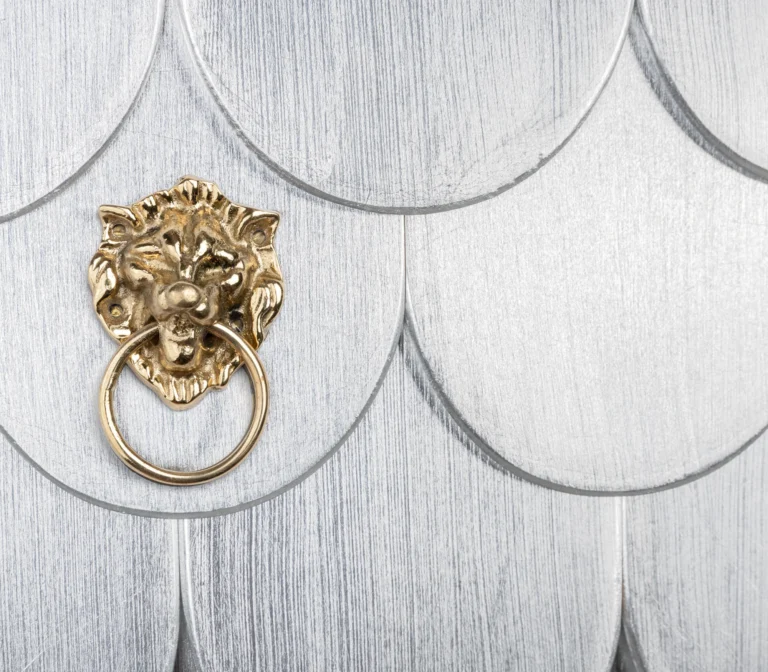
And somewhere inside it, a lion you have already met is waiting. 🦁
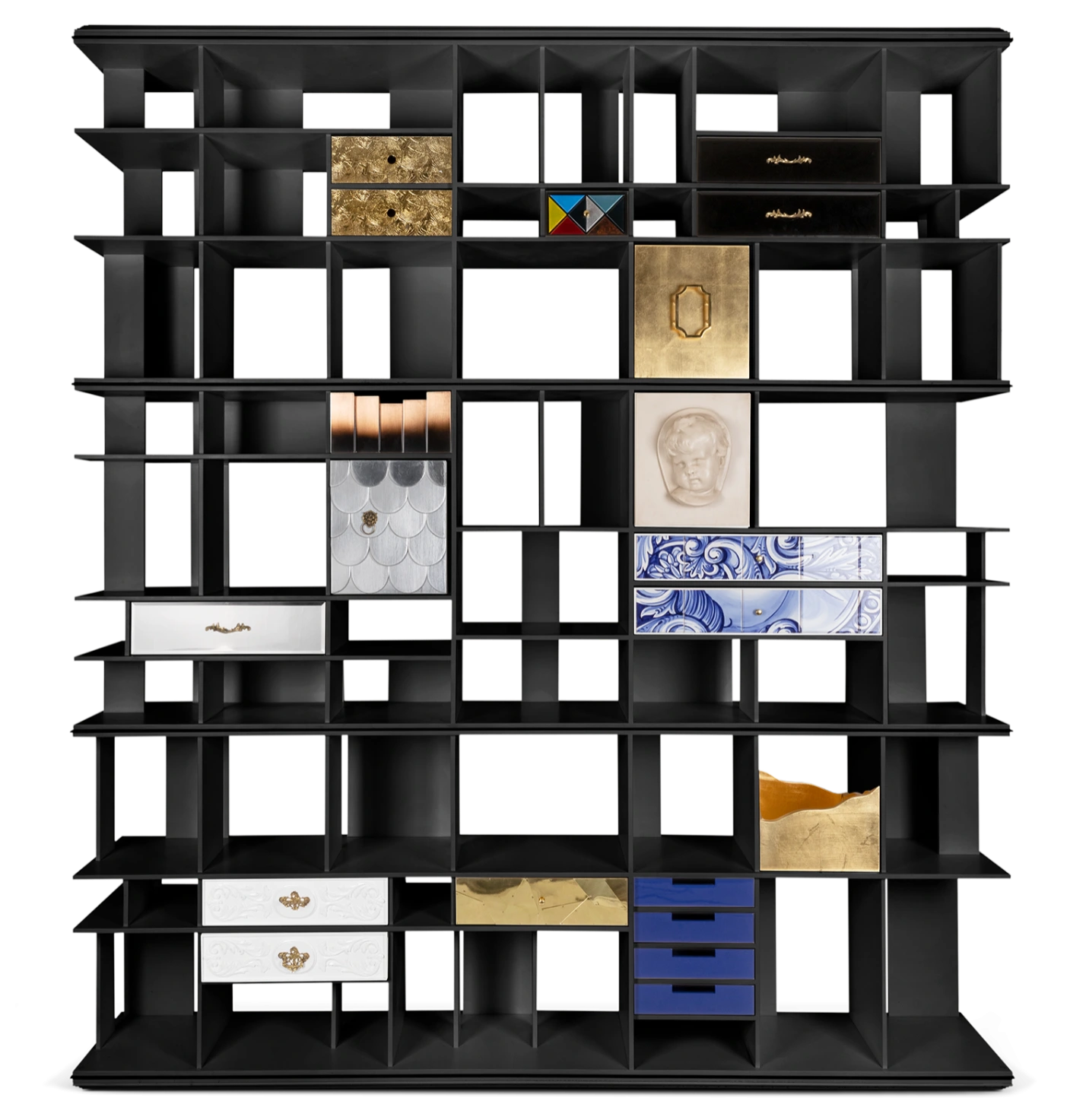
Boca do Lobo and its artisans could have made the Coleccionista Black Bookcase a grid.
Straight lines.
Open compartments.
A perfectly competent place for perfectly organised books.
Instead, they interrupted it.
Brass appears where brass was not required.
Ceramic enters the architecture.
A face watches quietly from one compartment.
Blue takes its place as though it had always belonged.
Drawers refuse to repeat themselves.
They improve something less measurable—
the feeling that someone cared.
Almost Nothing
Sometimes beauty does almost nothing.
Almost.
It changes the quality of one moment.
It makes one corner of the world less indifferent.
It creates the ridiculous desire to touch a drawer,
walk around a chair or look underneath something nobody else thought to inspect.
It reminds you that another human being was here before you—
and decided that enough was not the end.
Before you knew what it was, you had already looked.
Let That Be Enough
We are not asking whether beauty is necessary.
The answer is easy.
No.
Neither is wonder.
Neither is poetry.
Neither is the gold lion on a drawer that would open perfectly well without him.
But necessity has been given too much authority.
A life containing only what it can justify is not a well-designed life.
Only an efficient one.
So the next time something catches your eye and refuses to explain itself, do not rush to become sensible.
Do not immediately ask what it does.
Stay there for another moment.
Let it remain unnecessary.
Let it be beautiful.
Let that be enough.
One of the sparks behind this reflection came from Chase Hughes and his video, What Is a Flattened Person?.
Ideas travel.
This one found its way into our world.