Born in Hanover in 1988, Martin Köster discovered his subject later than many artists discover theirs. For years he worked almost exclusively in graphite, never finding a reason to exchange monochrome for colour. That changed the moment he began painting cities.
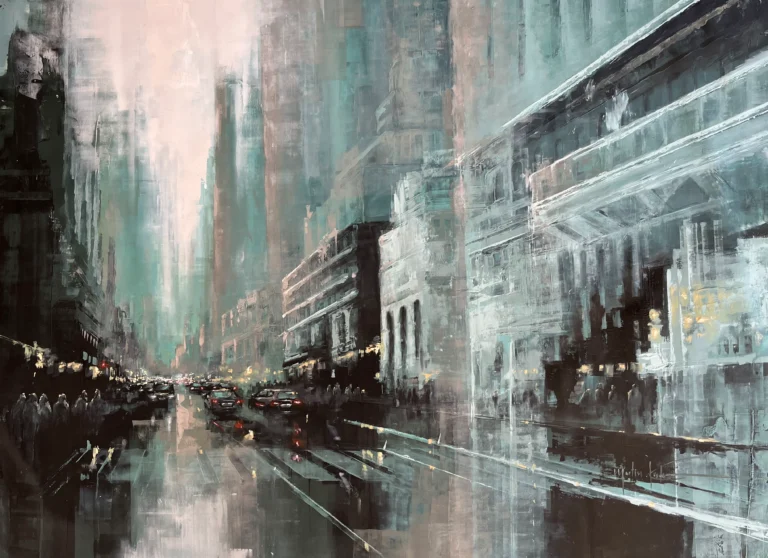
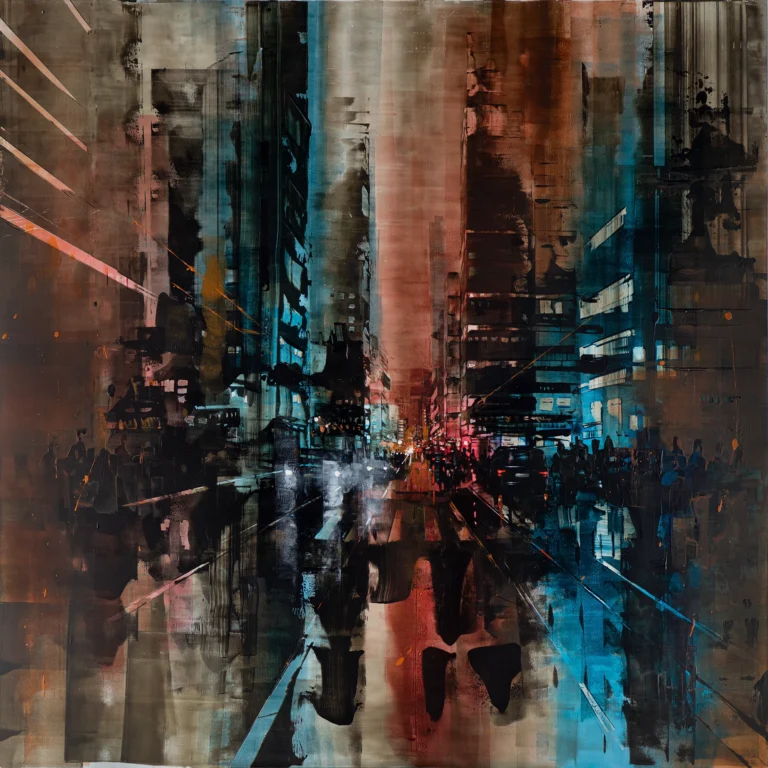
Suddenly, reflections on wet streets, illuminated windows and the glow of passing traffic offered something graphite never could — a language built entirely from light.
Instead of chasing famous landmarks, Martin became fascinated by what happens between them. A restaurant doorway after dark. The reflection of headlights across the pavement. The quiet transformation that arrives every evening when a city stops being simply a place and begins to reveal its atmosphere.
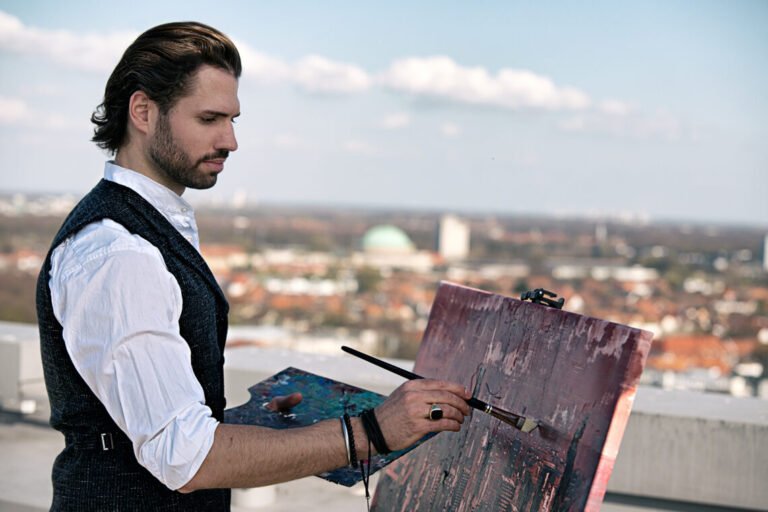
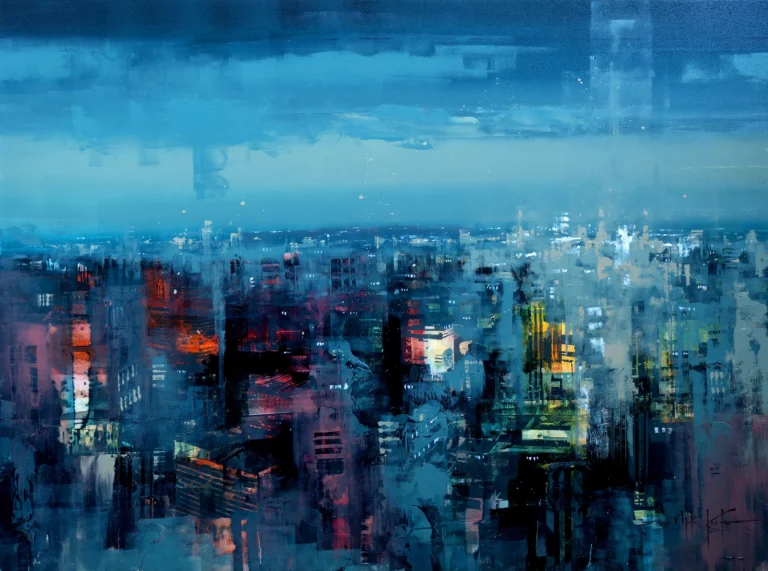
Whenever possible, he paints from the rooftops of skyscrapers. From there, the city reveals a rhythm that disappears at street level. Distance doesn’t remove him from its energy;
it allows him to understand it. Looking down, traffic becomes movement, architecture becomes composition and light begins to connect everything into a single living landscape.
Although his paintings are instantly recognisable, Martin rarely explains them through symbolism. Instead, he prefers to leave space for the viewer. Edges dissolve, figures remain anonymous and details fade into abstraction, allowing memory and imagination to complete what the brush deliberately leaves unfinished.
His process reflects the same quiet precision. Working almost exclusively with oils, he often uses palette knives and tools he makes himself, introducing a brush only during the final stages. Every layer remains visible, preserving the texture, the revisions and the time invested in each painting. Nothing feels rushed, because nothing is.
Perhaps that is why his cities feel strangely familiar.
Not because we have walked those streets.
But because we have all recognised a reflection,
paused beneath a window glowing after dark,
or recognised a feeling we could never quite put into words.